


Here is how to day trade a small account in 2026: trade one setup, size small, and stack singles until your account earns the right to size up. That is it. The $25,000 wall that kept small accounts out of the game for 25 years just came down, and the first thing most traders are going to do is misuse that freedom and blow up faster than ever.
I have been trading since 1999. I went full-time at the end of 2007 and founded Bulls on Wall Street in 2008. I have trained more than 7,000 students, and I have watched what happens to small accounts in every kind of market. Bull runs. Brutal bears. Dead, range-bound chop that pays you nothing for showing up. So when I tell you the rule change is good and dangerous at the same time, it comes from sitting in front of the screen full time since 2007, not from a headline.
Let me walk you through what actually changed, why it matters less than you think, and the exact way to grow a small account now that the guardrail is gone.
What Actually Changed on June 4, 2026
The Pattern Day Trader rule is dead. For 25 years, if your margin account held less than $25,000 and you made four or more day trades in five business days, your broker flagged you and froze you out. Three round trips a week was your ceiling. Miss a setup on day four and you sat on your hands.
On April 14, 2026, the SEC approved FINRA's amendments to Rule 4210. The effective date was June 4, 2026, confirmed in FINRA Regulatory Notice 26-10. The $25,000 minimum equity requirement is gone. The day-trade count is gone. The pattern day trader designation itself no longer exists, per the SEC's investor.gov guidance.
What replaces it is a real-time intraday margin system. Instead of a flat dollar floor that had not been touched since the dot-com crash, your buying power is now calculated dynamically based on the actual risk of your open positions. A standard $2,000 margin minimum still applies, and FINRA is blunt that this is not a free pass. In their own investor guidance on the new intraday margin requirements, they remind traders that frequent trading on margin is still high-risk and that you should only ever use money you can afford to lose. Brokers have until October 20, 2027 to fully phase it in, so rollout will be staggered. Check with your broker. If you are still deciding between a margin account and a cash account, read my margin vs cash answer for small accounts. For the complete breakdown of what changed and when, see my full guide to the PDT rule elimination.
That is the news. Now here is the part nobody is telling you.
Why Killing the Rule Is a Net Positive
Net net, I think this is good for traders. And the reason has nothing to do with freedom or fairness. It is about a specific psychological trap the old rule created.
I watched too many of my students hold a loser overnight because they did not want to waste a day trade. Picture it. You buy a high flyer at 20. It rips, then it reverses. Your stop is hit. But you are sitting on three day trades already this week, and if you sell, you have burned your fourth, and now you are locked out tomorrow. So you get stubborn. You hold. You tell yourself it will come back. And the gap down the next morning turns a manageable loss into a disaster.
That happened more than you would think. Traders would rather sit on a losing position than lose the ability to trade the next day. The rule that was supposed to protect undercapitalized traders was quietly teaching them to override their own stop losses. Removing it removes that trap. Good riddance.
What You Lost When the Wall Came Down
Here is the uncomfortable other side, because I am not going to pretend this is all upside.
There was something real about taking a small account and building it up under the old rule. You had to be selective. With only three day trades a week, you could not machine-gun the market. You picked your spots. You mixed in swing trades. You ground it out, good decision after good decision, until one day you crossed $25,000 and the handcuffs came off.
That moment meant something. You earned it with skill and time and patience. It was a rite of passage on the trader's journey, like the first road trip you took as a teenager once you finally had your license. The grind made you cherish the account, because you knew exactly what it cost to build it.
That rite of passage is gone now. Which means the discipline it used to force on you is something you now have to manufacture on purpose. Nobody is going to cap your trades for you anymore. The guardrail is off the mountain road. You are the guardrail now.
The Brutal Truth: The PDT Was Never What Held You Back
I need to be direct with you, because this is where most people are going to lose money in 2026.
I have talked to a lot of traders who are convinced the only thing standing between them and success was the PDT rule. They believe it. They think the moment the cap is lifted, the profits start. That is a fantasy, and it is about to get a lot of people hurt.
The PDT was a scapegoat. If you were not making it before, an arbitrary trade-count rule was not the reason. The reason was skill, and the brutal amount of learning it takes to actually become a professional. The finance game has the smartest people in the history of the world attached to it. People with capital, experience, connections, and infrastructure you cannot imagine. That is who is on the other side of your trade. This is the big boy game. If you think you were losing because of a regulation and not because of a skill gap, you have missed the entire point.
So the number one mistake newly unleashed traders are going to make is obvious. They are going to overtrade like their life depends on it, trying to make a fortune all at once, because for years they told themselves the rule was the only thing holding them back. Now the rule is gone and the skill gap is still there. Except now they can overtrade straight into it at full speed, with no cap to slow the bleeding.
The Skill-Capital Curve
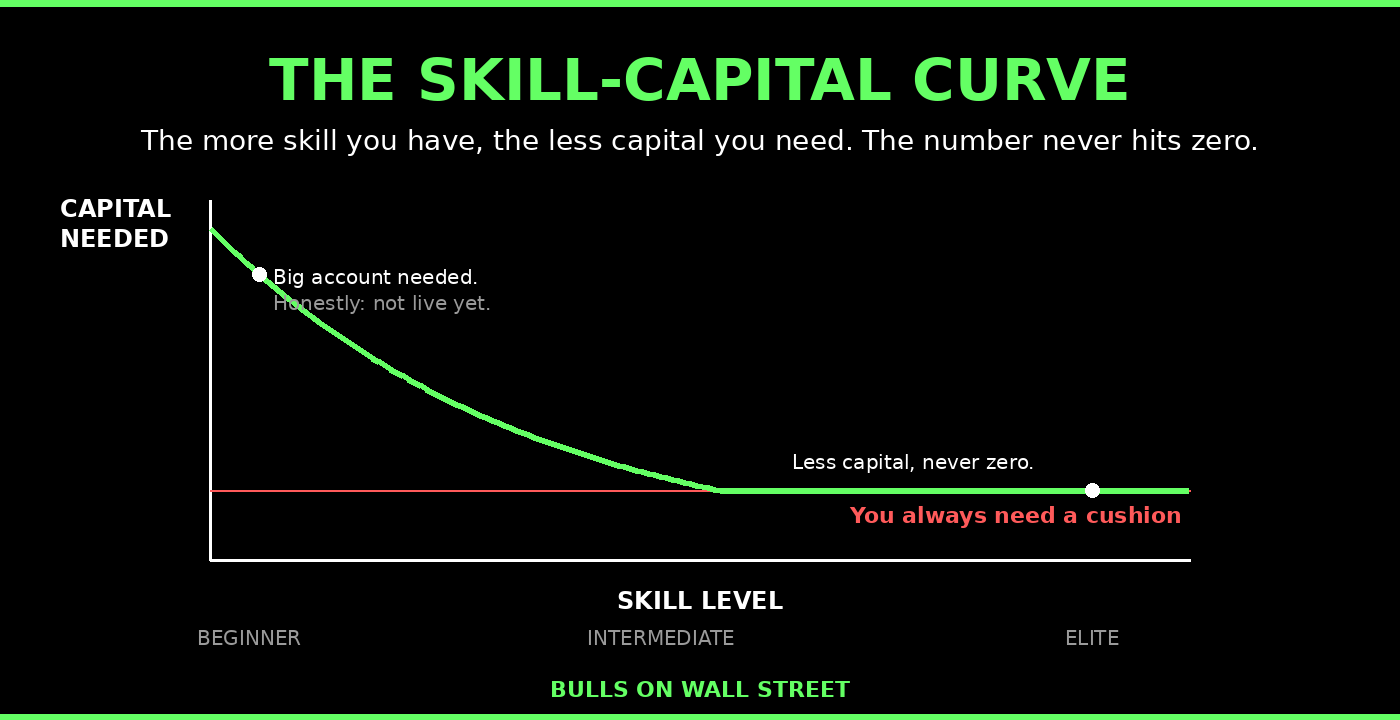
Before you think about going full-time on a small account, you have to understand the relationship between skill and capital. They trade off against each other, but neither one ever hits zero.
The higher your skill, the less capital you need to extract a given income. The lower your skill, the more capital you need just to survive your own mistakes. But even an elite trader needs real capital, because capital is your cushion. It is what lets you absorb drawdowns and bad days and bad weeks without getting knocked out of the game.
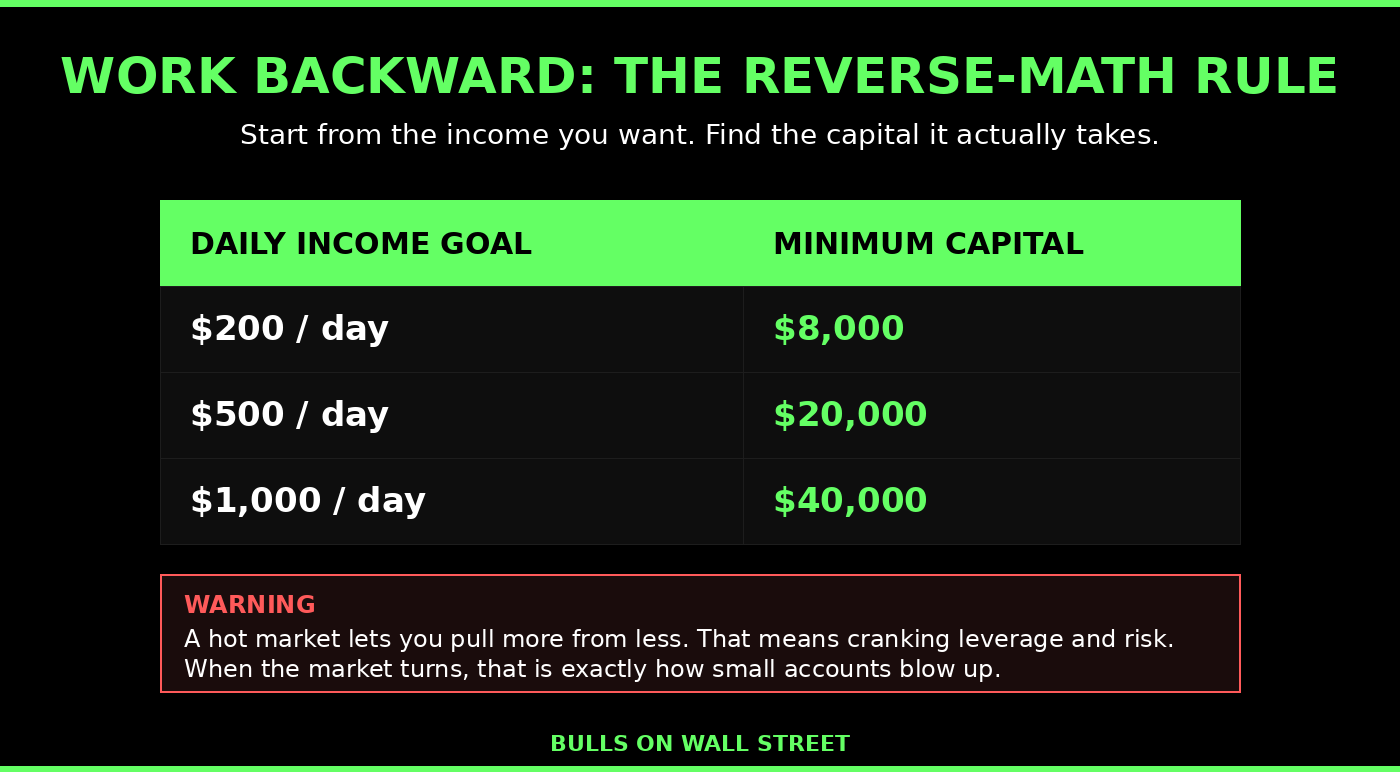
Now run the math the right way. Work backward. For every $1,000 a day you want to pull out of the market, ask what amount of capital that realistically requires at your skill level. If you think you are going to replace a full-time income by yoloing $5,000 into zero-day options because somebody on Twitter said you can, you are not being logical. You are gambling and calling it a job.
Here are my real minimums. If your goal is $1,000 a day, you need at least $40,000 in capital. If your goal is $500 a day, you need at least $20,000. Scale down from there. And yes, in a hot market you can pull a lot more out of a lot less. But the only way to do that is to crank your leverage and your risk profile way up, and when the market turns on you, and it always does, that is exactly how you take the kind of losses that end accounts. The number is the number for a reason. It is your cushion, not your ceiling.
Have the honest conversation with yourself. Are you actually an elite trader? Do you have a quantifiable, repeatable edge every single day, in a bull market, a bear market, and a dead range-bound tape? Not a couple of patterns you half know. An edge. If the answer is no, you are not ready to make this your income no matter how big your account is.
The Double Dip: Why You Keep Your Job
This is why I preach the Double Dip. Keep your job while you learn. Earn income from work and grow your trading account at the same time. Stack cash for years before you even think about going full-time.
The Double Dip works best when your learning is structured. The free Bulls on Wall Street community gives you a 7 Day Foundations Sprint you can run at night after work, so the job funds the account while the sprint builds the skill.
I have seen too many new traders rush to trade full-time because they are sick of their desk job, or their work-from-home job, and they just want to run their own thing. I get it. But wanting out of your job is not a trading edge. Going full-time before you are ready is how the journey ends early.
When I was coming up, I worked an extra full year at my job when I probably could have gone full-time already. On purpose. I wanted a $40,000 day trading account, which was a real size at the time. And then I wanted that same amount sitting in reserve as a backup, in case something went wrong. I planned for the worst-case scenario so I would have the longest, easiest runway to succeed. Not a month down the road. Ten years down the road.
That is the mindset the rule change does not give you. You have to bring it yourself. The wall coming down does not shorten the journey. It just removes the thing that used to force you to respect it.
The Fix: One Setup, Stacked
Here is what actually grows a small account. Not leverage. Repetition.
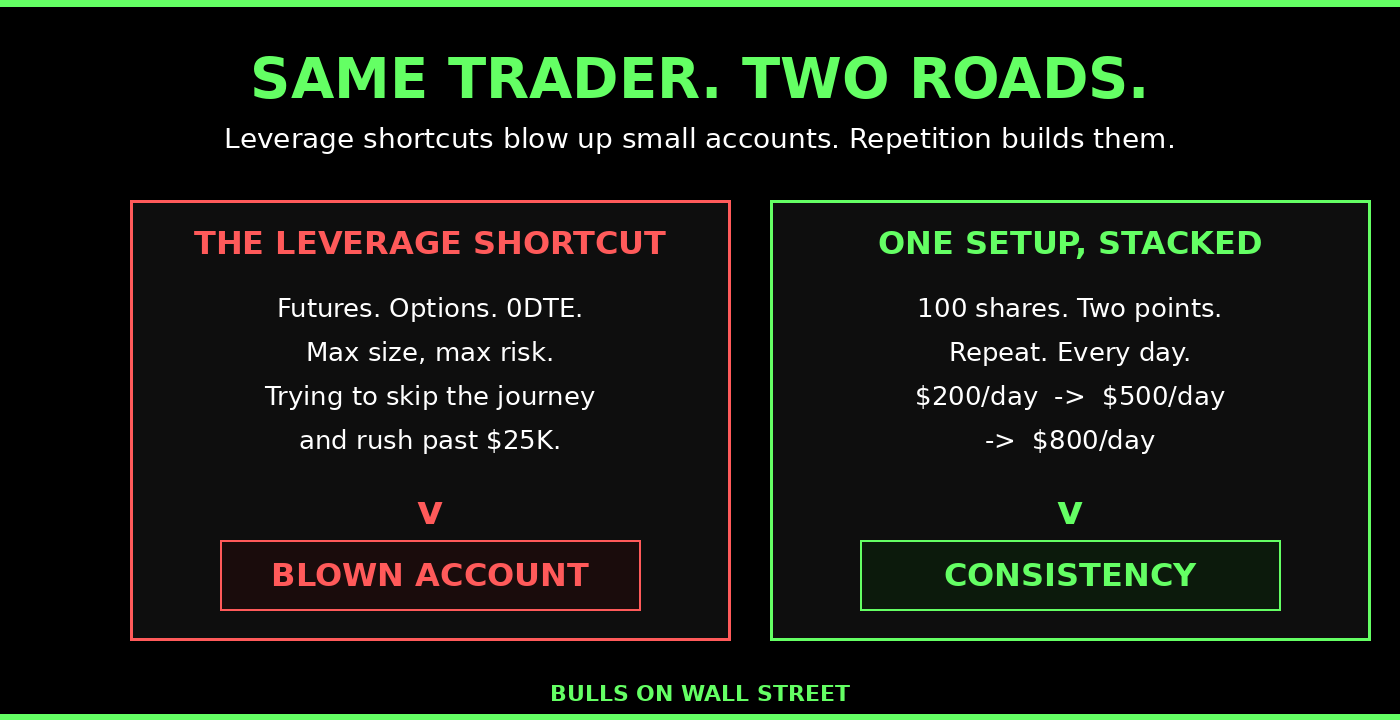
One of my favorite students of the last couple of years is a guy named Robert Brunoni. Seriously talented. But when he came to me, he was doing what almost everyone does. He tried futures. He tried options. He tried every high-leverage product he could find, all of it in service of one goal: rush past the process and get over $25,000 as fast as possible. He wanted to skip the journey.
He has been to my house twice now to work one on one. And every time, I told him the same thing. There is no rushing this process. What you need is one setup you can execute every single day, and then you build on it and grow it.
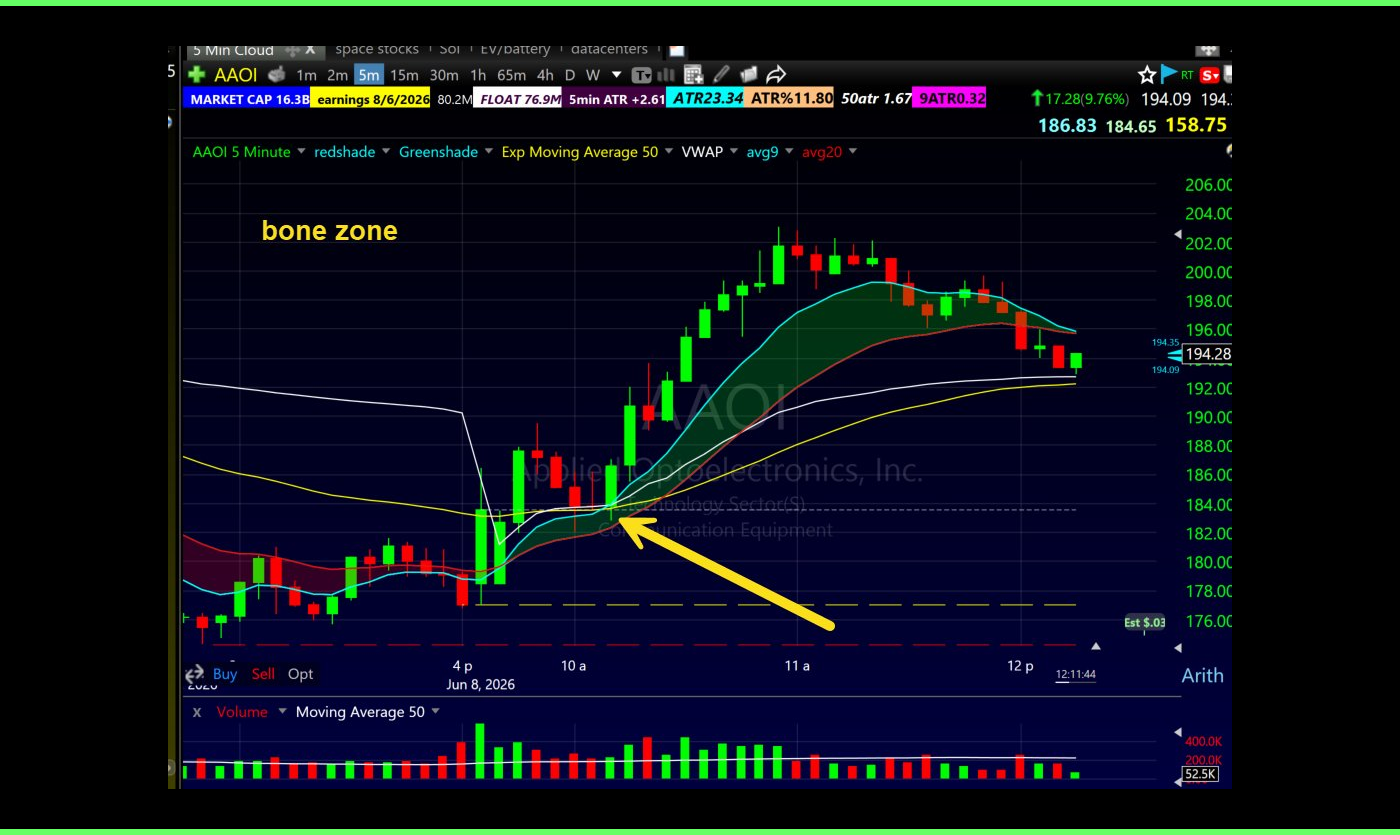
Once Robert finally knuckled down and did it the right way, he found two setups that worked for him. He was trading the first pullback into the Bone Zone, and an assortment of VWAP trades. That was it. Two setups, run over and over, both straight from my day trading strategies playbook.
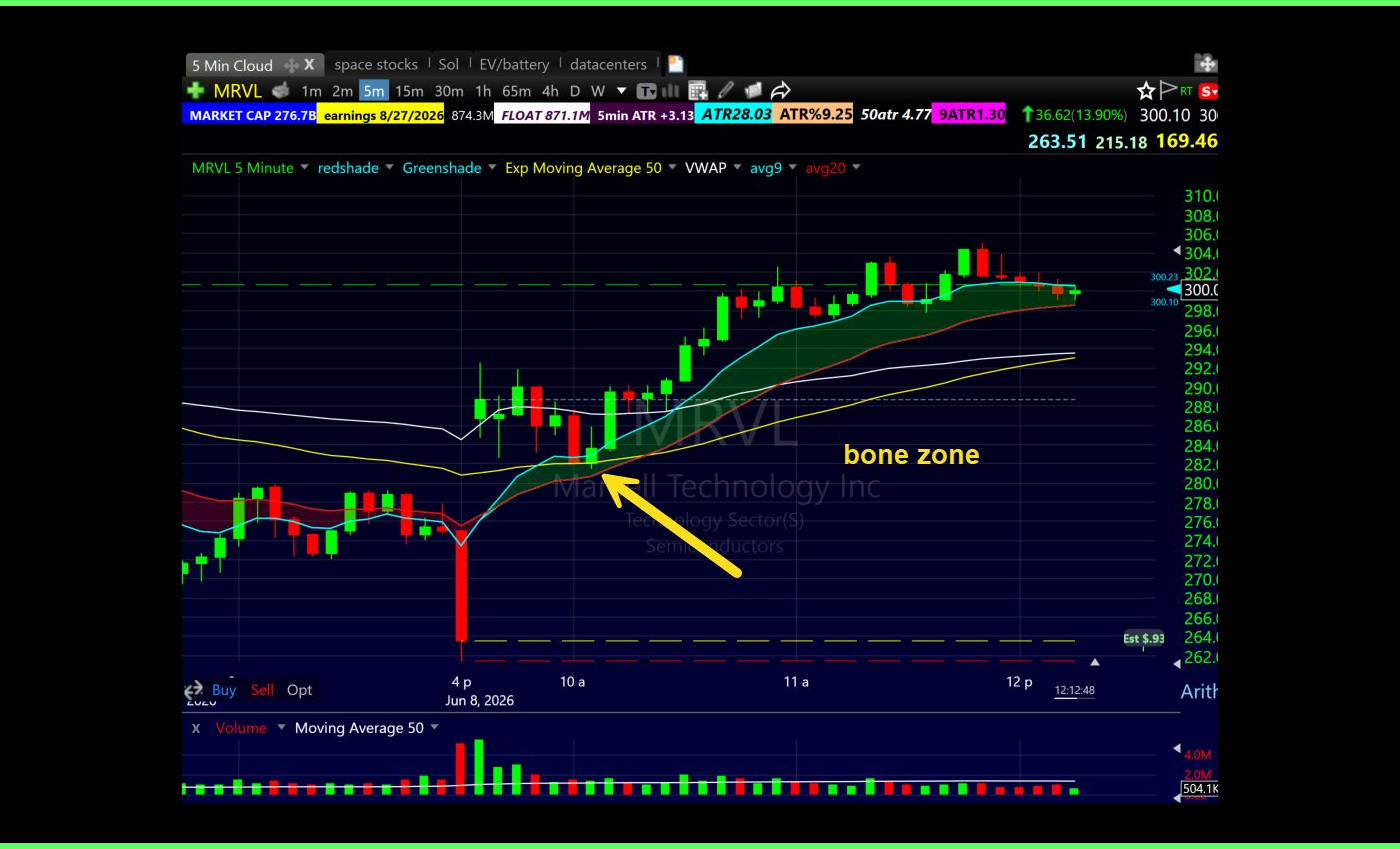
And he went on a run. A couple weeks in he was making $200 a day. Then $500. A month later, $800 a day. Nothing crazy. He is not pulling millions out of the market. But he is consistent, and consistent is the whole ballgame. And all of it came from getting away from the fancy high-leverage products he thought he needed.
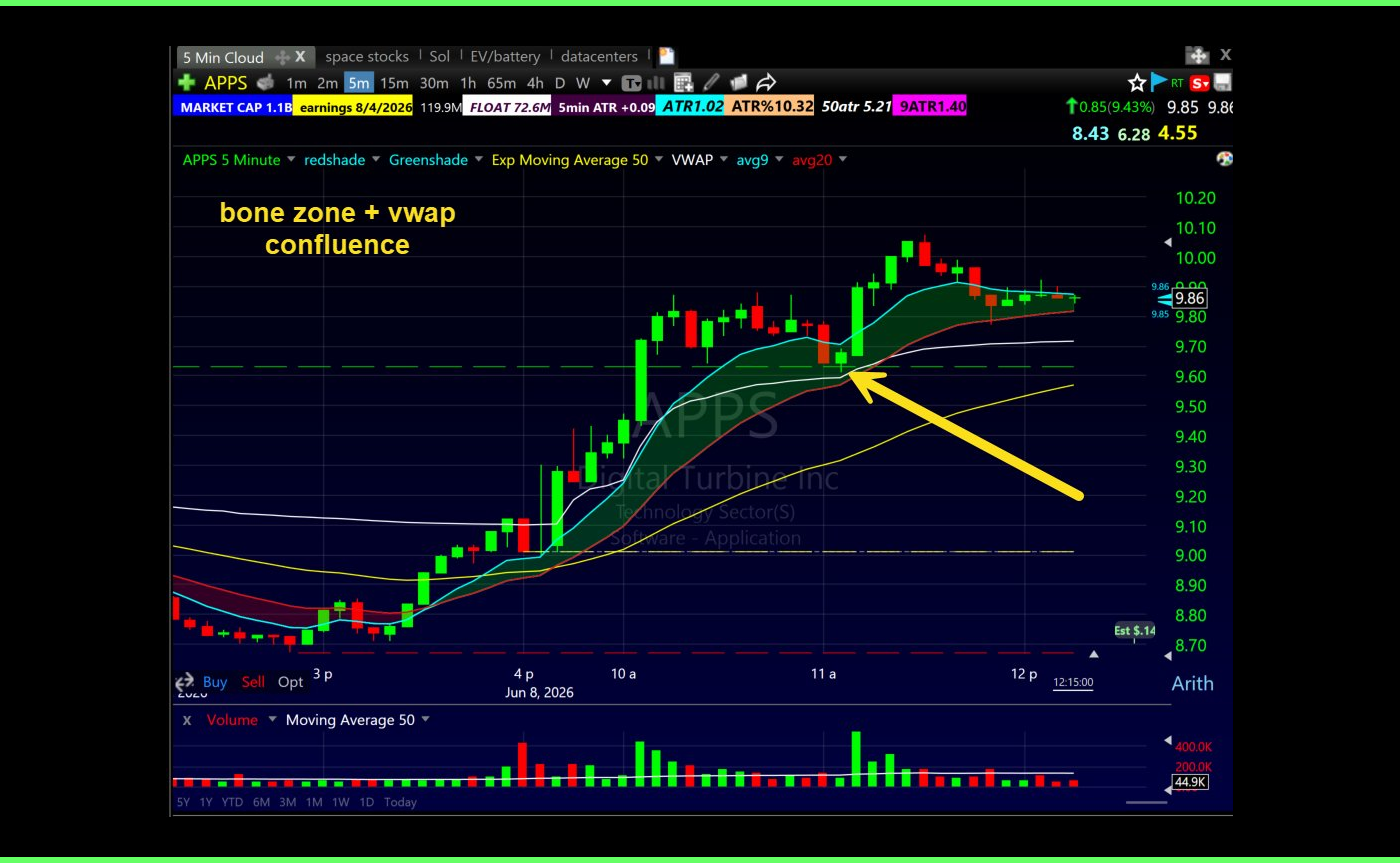
When you have a small account, big leverage is not the shortcut. It is the thing that blows you up. I would much rather see one of my students trade 100 shares of something clean and take a point or two at a time, then do it again. If your goal is $500 a day, you do not need leverage. You need 100 shares and two points, a couple of times. Take two here. Take two there. Before you know it, you have hit your number, and you did it without betting the account.
The setup I run for this is the catalyst first pullback into the Bone Zone. I broke down the exact entry, the stock selection filter, and the share math with real trades in the best small-account day trading strategy.
The Rules That Keep a Small Account Alive
Now that no rule caps you, give yourself rules. These are the ones that matter most for a small account in 2026.
Trade one setup until it is automatic. Master a single repeatable edge before you add a second. Robert ran two. You can start with one. Machine-gunning ten tickers because you finally can is how the account dies.
Risk a fixed, tiny slice per trade. Live by the 1% rule. My complete risk management system for day traders builds on it. On a small account, one oversized loss can erase a week of stacked singles. Position size off your stop, every time. This is the heart of managing risk on a small account.
Use a hard daily stop. When you are down a set number of losses or dollars for the day, you are done. Walk. The market will be there tomorrow, and now there is no rule forcing you to wait, which means you have to force yourself.
Stay selective. The old cap made you pick A-plus trades. Keep doing that on purpose. The freedom to take 40 trades a day is not permission to take them.
Respect the journey. It took me seven years to become consistently profitable. If you want the real timeline, I broke it down in how long it takes to learn day trading. The rule change does not compress that. Only screen time and good decisions do.
If you want to see this applied live, I trade real money every morning and walk through these exact setups in the Bulls on Wall Street trading chatroom, and I post breakdowns on my YouTube channel. For the scanning and charting I use to find these setups, I run TC2000.
FAQ
Can you day trade with less than $25,000 in 2026? Yes. As of June 4, 2026, the $25,000 minimum equity requirement for pattern day trading was eliminated when the SEC-approved amendments to FINRA Rule 4210 took effect. A standard $2,000 margin account minimum still applies, and your buying power is now based on real-time intraday risk rather than a flat dollar floor. For the full answer, including what to check with your broker before you start, see can you day trade under $25K now.
Is the PDT rule really gone? The pattern day trader designation, the $25,000 minimum, and the four-trades-in-five-days count are all removed from the rule. They are replaced by an intraday margin framework. Some brokers may still apply the old system during the phase-in period that runs through October 20, 2027, so confirm your broker's timeline.
How much money do I actually need to day trade a small account? More than you probably want to hear. As a realistic baseline, figure roughly $20,000 in capital for a $500-a-day goal and at least $40,000 for $1,000 a day. The higher your skill, the less capital you need to extract a given income, but you always need a cushion to survive drawdowns. You can pull more from less in a hot market, but only by cranking leverage and risk, which is how accounts blow up when the market turns. Trying to make a living off $5,000 is gambling, not trading.
What is the best strategy for a small account? One repeatable setup, traded small, over and over. Pick a single high-probability edge like the first pullback or a VWAP reclaim, size at 100 shares while you build, and take a point or two at a time. Consistency beats leverage every time on a small account.
Should I quit my job to day trade now that the rule is gone? No. The rule change does not shorten the learning curve. Keep your job, stack cash for years, and grow your account on the side. This is the Double Dip, and it gives you the longest runway to actually make it.
Did removing the PDT rule make day trading easier? It removed a friction, not the difficulty. The hard part was never the rule. It is building a real edge against the most sophisticated players in the world. Blaming the PDT for past losses is the mistake that gets traders hurt now that the cap is off.
What is the biggest mistake small-account traders will make in 2026? Overtrading. With no cap on day trades, undisciplined traders will machine-gun the market trying to get rich fast, and they will blow up faster than they ever could under the old rule. Give yourself a daily stop and trade selectively.
Is leverage a good way to grow a small account fast? No. Chasing high-leverage products like zero-day options or oversized futures positions to skip the journey is the single most common way small accounts blow up. Growth comes from repetition of a clean setup, not from leverage.
What is the Bone Zone? The Bone Zone is the shaded area between the 9 EMA and the 20 EMA on a 5-minute chart. When price pulls back into that zone and a green candle forms and holds inside it, that is a high-probability entry, with the stop under that candle. It is a core part of the first pullback setup. If you are still learning candles, my candlestick chart patterns PDF covers every pattern I actually use.
How long does it take to grow a small account into a livable income? It varies, but plan in years, not weeks. It took me seven years to become consistently profitable. The traders who grow steadily are the ones who treat it like a craft and stack small, consistent gains, not the ones swinging for a fast jackpot.
Does the new intraday margin rule apply to futures or crypto? No. The FINRA Rule 4210 change applies to U.S. equities and equity options traded through FINRA member broker-dealers. Futures, forex, and crypto were never subject to the PDT rule and are unaffected.
Can I still get flagged or restricted under the new rules? The pattern day trader flag no longer exists, but you can incur an intraday margin deficit if your positions consume more margin than your account supports. Handle that poorly and repeatedly and your account can still face restrictions, so margin discipline matters more than ever.
Start Your Journey the Right Way
The wall is down, but the game did not get easier. It got more honest. There is no rule left to blame and no rule left to protect you, which means everything now comes down to skill, capital, and discipline.
That is exactly what we teach. In the Bulls on Wall Street 60-Day Bootcamp, you learn one setup at a time, simulate it until the data supports going live, build a real business plan, and watch me trade these setups with real money every morning before you ever risk a dollar. No hype. No shortcuts. The journey, done right, so you are still in the game ten years from now.
If you are serious about growing a small account in 2026, join the next 60-Day Bootcamp and learn to do it the way that actually lasts.
About the Author
Kunal Desai is the CEO and founder of Bulls on Wall Street. A professional trader since 2007, he has navigated every major market cycle -- from the 2008 financial crisis to today's high-volatility environments. Having mentored 7,000+ students through his live trading bootcamps, Kunal trades live every morning in the Bulls on Wall Street Trading Chatroom, where a full-access 7-day trial costs $7. He is dedicated to teaching real-world execution and high-probability strategies. Based in Miramar Beach, Florida.
Connect with Kunal: Read his full story | Instagram | YouTube

