

Trading Psychology: The Mental Game That Decides Every Trade
Updated March 2026
Touon made seven figures last year.
When I asked him how, he shrugged and walked me through a Bollinger Band setup on the hourly chart. Wait for the confluence. Place the stop. Manage the size. That is it. He knows that setup down to a granular, microscopic level. And he does it the same way every single time, whether he is up $40,000 on the month or down $8,000.
I have another student who has been with me for years. Knows TC2000 and TradingView at a level most professional traders do not. Builds my scan layouts when I need them. Can explain every nuance of every pattern I teach. And he cannot get ahead. Every time he gets close to a real breakthrough, something goes sideways. He overtrades on a slow day. A cascade of small losses wipes out the buffer he spent weeks building.
Same program. Same curriculum. Seven figures versus spinning wheels.
The difference is not the strategy. It is never the strategy.
I have been teaching traders since 2008. Founded Bulls on Wall Street, trained 7,000+ students, been trading professionally since 2007. What the data from all those students shows is clear: 80% of trading success comes down to psychology. Not indicators. Not scanners. Not which moving average you use. The mental game.
This is the hub for the BOWS trading psychology cluster. Read this post for the framework. Then follow the links to go deeper on whichever specific trap is costing you money right now.
Why the Mental Game Runs Everything
Most traders come in thinking trading is a knowledge problem. Learn enough patterns, study enough charts, build a good enough scanner, and the money follows. So they grind. They do the homework. They show up.
And then the market opens.
A stock gaps up. They hesitate. It runs without them. The FOMO fires and they chase it at the wrong price. It pulls back. They are now in a losing position they should not have taken. The loss stings. They go back in bigger to make it back. Lose again. Press harder. Spin cycle. Day gone.
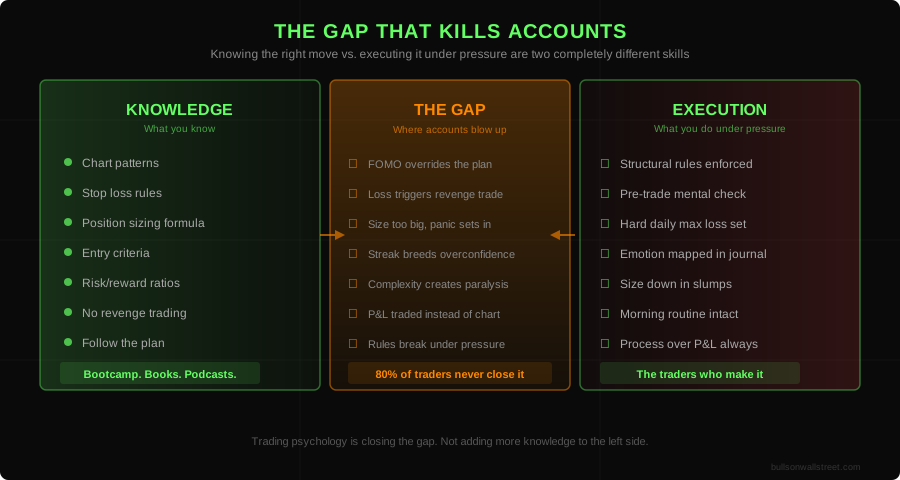
None of that is a knowledge failure. They knew better. They still did it. That gap, knowing what to do versus actually doing it, is the entire game of trading psychology.
FINRA research on retail day trader performance identifies emotional decision-making as the primary driver of retail losses, not bad strategies. The day trading strategies that work are learnable. The psychology to execute them is the hard part. The strategies most retail traders use are not the problem. The decisions made in an agitated state are the problem.
The Four Pillars of Trading Psychology
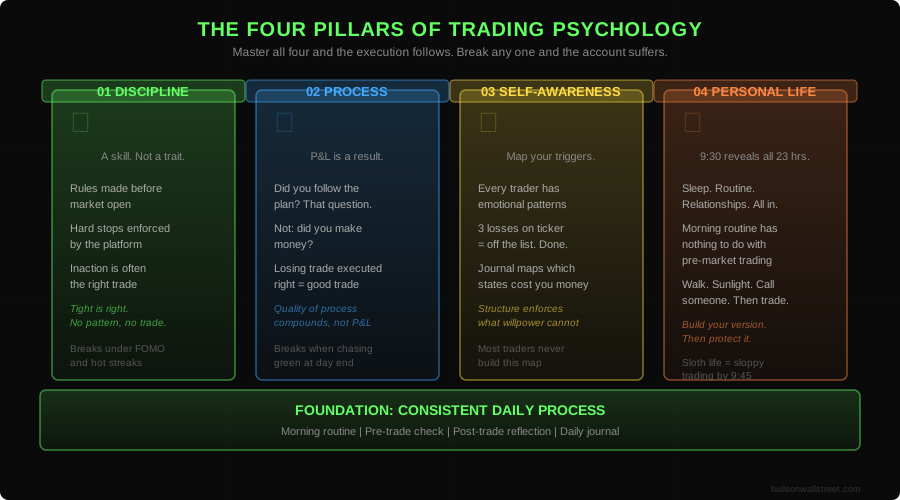
Discipline: The Skill Nobody Talks About Building
Discipline gets talked about like a personality trait. Either you have it or you do not. That framing is wrong and it is expensive.
Discipline is a skill. You build it through repetition of doing the hard thing when the easy thing is sitting right there. In trading, the hard thing is almost always inaction. Waiting for the setup to be clean. Sitting on your hands when the market is choppy. Taking the stop loss when everything in you wants to add to the position.
The traders who build lasting discipline do it by making decisions before the market opens, not during. Rules get written when you are calm, analytical, and have no money on the line. Execution follows the rules when it is 9:45 and price is moving. The SEC has documented this behavioral separation as the core difference in retail trader outcomes. Tight is right. That principle applies to chart patterns and it applies to your rule set.
Process Over P&L
Every trader who has ever blown up an account has made the same mistake at some point: they started trading their P&L instead of the chart.
Down $400 and the thinking shifts from what does the chart say to how do I make back $400. Those are completely different questions. One leads to good trades. The other leads to desperation trades.
The P&L is a result. You cannot control it directly. What you can control is every input that goes into a trade: the setup quality, the size, the entry point, the stop placement, the exit discipline. Get all of those right and the P&L takes care of itself over time. Did you follow the plan? That is the question. Not: did you make money.
Self-Awareness Is the Actual Edge
Every trader has emotional patterns that show up in their results. Specific situations that reliably cause them to break their own rules. A loss in the first 30 minutes. A slow market where nothing is setting up. A hot streak that makes them feel untouchable. Month-end pressure to hit a number.
Most traders never map their own emotional fingerprint. They know the general rules: do not revenge trade, do not overtrade, do not let FOMO drive entries. But they have no specific map of their own triggers. So the same situations keep producing the same bad trades.
The fix is structural, not motivational. Three losses in a row on one ticker and it comes off the watch list, the broker platform, and the charting software. Gone. The structure enforces what the willpower cannot. The full mechanics are in the revenge trading guide.
Your Personal Life Shows Up at 9:30
The version of you that walks into the trading session every morning is whoever you built through your habits the other 23 hours of the day. The discipline, the impulse control, the emotional baseline. All of it gets carried in.
A trader who slept four hours, skipped their morning routine, and opened the platform already stressed has dramatically less impulse control than the same trader on a rested, settled morning. The first loss hits differently. The reactive brain fires faster. The bad decisions come earlier.
My morning routine has nothing to do with pre-market scanning. Walk. Sunlight. FaceTime my mom. Things that get my nervous system down before I open the platform. I used to lift heavy every single morning before the open and my testosterone or whatever it was would just be firing all day and it would get me in trouble by 9:45. Took me years to figure that out. Build your version. Then protect it.
The Three Mental Traps That Kill Accounts
FOMO: The Urgency That Is Always Wrong
Social media has made this worse than it has ever been. You see a stock already up 15% on Twitter. You see somebody posting a win in the chat room. The urgency fires. That is the one. And you chase it at the worst possible entry.
What FOMO does mechanically is push you into extended entries with blown risk/reward. The setup is not clean. The stop has to go wider to make any sense. The reward is limited because the move already happened. And you entered not because the chart said to but because the feeling said to.
One good trade. One good setup. That is the entire job for this session. The pre-trade entry checklist builds a filter between the emotional impulse and the actual entry decision.

Overconfidence: The Hot Streak Trap
One of my students, Barb, runs a small hedge fund. She had a run of months that were just crushing it. And I could see it happening in real time. The standard was slipping. Stock selection a little looser. Entries a little less precise. Sizing creeping up because everything was working.
I told her straight: hold the horses. The second you feel like you have mastered the market, the market is going to master you.
Hot streaks lower your standards quietly. The prep that used to take two hours takes one. The journaling gets lighter. None of it shows up immediately. Two weeks later the streak ends and you have no discipline to fall back on because you eroded it during the run. The standard is the standard. Two hours of prep is two hours of prep whether you are up 20% on the month or flat. How you protect that standard is covered in the why traders fail post.
The Complexity Trap: Indicators as Avoidance
Early in my career I had 45 indicators on my charts. MACD. Fibonacci. Multiple moving averages. Pivot points. The chart looked like a Rorschach test. And it never made me money. What it did was create paralysis. One indicator said buy. Another said sell. I froze while the trade played out without me.
Complexity is how traders avoid accountability. Strip away the indicators and every entry is yours to own. A real setup should hit you like a kick. You look at the chart and you know immediately. If you are tilting your head trying to talk yourself into something, toss it. No pattern, no trade. TC2000 is the tool I use for all of this, and the simplicity of what I actually have on my screen would surprise you.
Building the Mental Framework: Daily Habits That Work
The Morning Routine Is Not About Pre-Market
Before you open the platform, you need to be settled. Not excited. Not anxious. Whatever routine gets you there, protect it. Non-negotiable every single day.
The Pre-Trade Mental Check
Three questions before every entry. Am I in the right state to make this decision? Is this trade in my actual plan or am I reacting? Is the setup clean or am I talking myself into it? Five seconds. Catches more bad trades than any indicator.
Post-Trade Reflection
The question after every trade is not whether you made money. The question is whether you followed the plan. A losing trade executed correctly is better data than a winning trade you stumbled into. One you can repeat. The other one is luck.
Daily Journaling
Write your emotional state into your journal, not just the entry and exit. Were you calm? Were you rested? Were you following the plan or improvising?
Map emotional state to trade outcomes across 50 or 100 trades and patterns emerge that you cannot see any other way. That data is worth more than any new scanner or indicator. I use Tradezilla for all of this and send every BOWS student there. It auto-uploads from most brokers and makes journaling sustainable. Subscribe to the Bulls on Wall Street YouTube channel where I break down live trades and the mental side of the decisions in real time.
When the Slump Hits
Drawdowns kill more traders than single bad trades. The weeks where nothing clicks. Stopping out endlessly, piling up small losses that compound into a hole.
Two things immediately. Cut position size in half. Not take a day off. Stay in the market but remove the ability to do real damage. If you lose again the next day, cut in half again. Second, send your journal to someone else. A mentor or trusted trading peer looking at it from outside the emotional weight finds two or three specific fixable things. I have had that outside perspective break more slumps for me than any indicator change ever has. Nobody gets out of slumps alone. The 30-day reset protocol covers how to structure that process when things get bad enough that you are questioning whether to keep going.
How the Trading Psychology Cluster Works
This post is the entry point. From here, go to the specific trap that is costing you money.
Cycle of taking a loss and immediately going back in bigger to make it back: Revenge Trading: Why It Happens and How to Stop It.
Been at it for months or a year, put in the work, nothing clicking: Why Traders Fail.
At the point of asking whether to quit trading entirely: Before You Quit Trading, Do This.
The risk management guide shows how the psychological framework connects to the mechanical system. Psychology without structure is just intention. Structure without psychology falls apart under pressure.
Frequently Asked Questions: Trading Psychology
What is trading psychology?
The mental and emotional factors that influence trading decisions. Discipline, emotional control, impulse management, the ability to follow a plan under pressure, and the behavioral patterns that develop over hundreds of trades. The strategy is what you know. The psychology is whether you can execute it.
Why do most traders fail psychologically even when they know the right rules?
Because knowing and executing are different skills. The reactive brain fires faster than the rational brain when money is on the line. That gap between knowing what to do and actually doing it is what trading psychology is specifically about closing.
How do you build real trading discipline?
Through structural rules, not motivational intentions. Hard daily max loss built into the platform. A defined entry checklist that every trade has to pass. Automatic position size cuts when things are going wrong. Rules made before the emotional state, not during it.
What is FOMO in day trading and why is it so destructive?
Fear of missing out. The urgency that fires when you see a stock moving without you. It pushes you into late entries at extended prices with blown risk/reward. Catching FOMO with a hard checklist is the fix. See the pre-trade entry checklist.
How does overconfidence hurt traders who are actually doing well?
By eroding the standards that were producing the results. Hot streaks lower prep discipline gradually. When the streak ends there is no foundation to fall back on because it was abandoned during the run.
Does a morning routine actually affect trading performance?
Yes and significantly. Research from the American Psychological Association confirms that structured morning routines reduce cortisol and improve executive function. Better impulse control, better decision quality, better ability to follow the plan when it is uncomfortable.
What is revenge trading?
Re-entering a position after a loss driven by the need to make it back rather than a new valid setup. Each decision is made in a progressively worse emotional state. Full breakdown and structural fix: Revenge Trading: Why It Happens and How to Stop It.
How do I stop trading my P&L instead of the chart?
Size down to where individual losses do not register emotionally. Then use a post-trade checklist that asks only about process. Did you follow the plan? Not: did you make money.
How does journaling actually improve trading psychology?
By mapping emotional state to outcomes over time so patterns become visible. Once you can see exactly which emotional conditions produce bad trading for your specific psychology, you can build structural guardrails around those conditions.
What separates consistently profitable traders mentally?
The ability to follow a process without deviation regardless of recent results. Not intelligence. Not technical knowledge. The capacity to take losses without reaction, take wins without changing the standard, and show up and do the same preparation every single day.
How do I get out of a trading slump without blowing up?
Cut position size immediately. Stay in the market with reduced risk. Then send your journal to a mentor or trusted peer and let them look at it from outside your emotional state. See the 30-day reset protocol for the structured version.
Ready to build the full system with live daily trading, real accountability, and a room of traders going through the same process: 60-Day Live Trading Bootcamp. Bootcamp 74 is running now.
This guide is part of our complete risk management system for day traders.
Related reading: Revenge Trading: Why It Happens and How to Stop It | Why Traders Fail | Before You Quit Trading, Do This | Risk Management for Day Traders | Pre-Trade Entry Checklist | How to Build the Best Trading Routine | First Pullback Trading Strategy | Small Account Risk Management | Position Sizing Calculator | Risk to Reward Ratio Guide | PDT Rule Explained
About Kunal Desai
Kunal Desai is the CEO and founder of Bulls on Wall Street. A professional trader since 2007, he has navigated every major market cycle -- from the 2008 financial crisis to today's high-volatility environments. Having mentored 7,000+ students through his live trading bootcamps, Kunal trades live every morning in the Bulls on Wall Street Trading Chatroom and is dedicated to teaching real-world execution and high-probability strategies. Based in Miramar Beach, Florida.