Updated June 2026
I started trading in 1999. Went full-time at the end of 2007. Built Bulls on Wall Street in 2008 and have trained over 7,000 students since. In 25+ years of watching markets open and close every single day, I have learned that the best trading education does not always come from a textbook or a chart.
Sometimes it comes from a film.
Not because Hollywood gets the mechanics right — they almost never do. But because the best trading movies nail the psychology. The greed. The fear. The pressure of making decisions with real money on the line. And occasionally, they capture a specific moment in market history so well that watching them years later still puts your stomach in knots.
This is my personal, ranked list of trading movies and stock market films. Eighteen of them — fiction and documentary, classics and one from 2023 that every momentum trader needs to see. I have added my own take on each one, including a few stories from the trading desk that will make some of these hit different.
Kunal Desai’s Top 5 Trading Movies, Ranked
If you only have time for five, watch these, in this order:
- The Big Short (2015) — the best film on trusting your own analysis over the crowd at a major turning point.
- Margin Call (2011) — the most realistic look at institutional risk management when the worst case finally arrives.
- Rogue Trader (1999) — the definitive lesson on what happens when a trader refuses to take a loss.
- Barbarians at the Gate (1993) — conviction and valuation discipline while chaos swirls around you.
- Inside Job (2010) — the documentary that explains why the market is not a level playing field, and how to trade once you accept that.

The Best Trading Movies About the 2008 Financial Crisis
If you want to understand systemic risk, contagion, and what happens when the whole machine seizes up, start here. This is the era where I cut my teeth as a full-time trader, so these films hit close to home.
The Big Short (2015)
This one is personal for me.
The 2008 financial crisis is the period where I cut my teeth as a full-time trader. I had just left my job — literally in the final weeks of my headhunting career — as the crisis was accelerating. Every conversation at the office was the same: how will we survive this? How will any business survive? Banks were going under. Car companies were begging for bailouts. Airlines were on the edge. The fear and uncertainty crept into everything, 24 hours a day.
I had to learn to short stocks fast.
That is when inverse ETFs became my best friend. I was trading FXP — a 2x inverse Chinese ETF — that was having routine 20 to 40 percent intraday moves up and down. Forty percent. On a single day. And FAZ, the 3x inverse bank ETF — every time there was even a whisper of a bank rumor, that thing would spike 20 percent in minutes. The ranges were extraordinary. It felt like trading penny stocks but you were doing blue chips.
The Big Short captures that era better than anything else I have seen. Ryan Gosling, Christian Bale, Steve Carell — they nail the disbelief of a small group of traders who saw the collapse coming while the entire financial establishment told them they were wrong. The film makes credit default swaps and mortgage-backed securities actually comprehensible through some of the most creative exposition ever put on screen.
The lesson for traders: the crowd is wrong at major turning points. Always. The traders in this film were not geniuses. They just did the work and trusted their analysis over consensus opinion. That discipline is what separates professionals from everyone else. It is the same discipline behind every day trading strategy we teach, including the first pullback trading strategy.
Required viewing. No exceptions.
Margin Call (2011)
This one does not get enough credit.
Margin Call follows a single night at a fictional investment bank as analysts discover the firm is about to implode. No explosions. No chase scenes. Just a series of conversations as senior executives figure out how to unwind billions in toxic positions before the market opens — and who takes the fall.
Kevin Spacey, Jeremy Irons, and Paul Bettany are all outstanding. But what makes this essential for traders is the risk management thread running through every scene. The entire crisis exists because nobody stress-tested the real downside scenario. They modeled for normal. Not for catastrophic.
Every trader who has ever held a losing position too long because they refused to acknowledge the worst-case should watch this film. Then go read our risk management guide for day traders and actually build the rules that keep one bad trade from becoming a career-ending one.
Too Big to Fail (2011)
If The Big Short shows you the crisis from the outside, Too Big to Fail puts you inside the room where the decisions were made.
This HBO film follows Treasury Secretary Hank Paulson, Fed Chairman Ben Bernanke, and a rotating cast of bank CEOs as the entire financial system teeters on the edge of collapse. Paul Giamatti plays Bernanke and William Hurt plays Paulson — both performances are extraordinary. You can feel the tension and the genuine terror from people who, even at that level, were not sure the world was going to hold together.
What got me watching this was the scale of the numbers being thrown around. Ten billion here. Twenty billion there. Decisions that would affect millions of people made in conference rooms over cold coffee. It was inspiring in the most unusual way — not because the situation was good, but because watching people operate at that level of pressure and consequence shows you what high-stakes decision-making actually looks like.
I was on the other side of those decisions in real time, trading FAZ and FXP as every news headline moved the tape. Watching this film years later and recognizing specific moments — the Lehman weekend, the AIG bailout, the Congressional testimony — is a surreal experience. The FDIC’s detailed breakdown of the 2008 financial crisis origins is worth reading alongside this film if you want the full picture of how close the entire system came to collapse.
If you traded through 2008, this film will hit you differently than it hits everyone else. If you did not, it will teach you more about tail risk and systemic contagion than any textbook.
Inside Job (2010)
This is the one that genuinely made me angry.
Inside Job is a documentary that methodically breaks down the 2008 financial crisis — how the banks, regulators, and rating agencies all failed simultaneously while ordinary investors were destroyed. It won the Academy Award for best documentary and deserved it. The research is meticulous. The interviews are damning. If you want to go deeper after watching, the Financial Crisis Inquiry Commission’s official report is the definitive government investigation into exactly what went wrong.
For day traders specifically, this film is a masterclass in understanding that markets are not a level playing field. The institutions have structural advantages. Knowing that changes how you trade. You stop fighting the tape and start following the smart money. You study where volume is going, not where the headlines say it should go.
Pair this with our guide on how to scan for explosive stocks to understand how to find setups where institutional flow creates opportunity for retail traders.
The Best Stock Market Movies About Greed and Wall Street Excess
These are the stock market movies most people think of first. Big personalities, bigger egos, and a recurring lesson: the trader who cannot define enough eventually loses everything.

Wall Street (1987)
Gordon Gekko. Greed is good. You already know the line.
What you may have missed watching it is how accurately Oliver Stone captures the obsession with informational edge. Gekko does not just trade — he hunts for advantages that nobody else has. The methods are illegal. But the underlying drive to find asymmetric information before the market prices it in? That is real trading psychology.
Bud Fox, the young broker desperate to impress Gekko, is every new trader who blows up their account chasing a guru. He abandons his own judgment and starts executing someone else’s conviction. That never ends well. Not in 1987. Not now.
Watch this and pay close attention to what happens when you let someone else do your thinking for you. Its 2010 sequel, Money Never Sleeps, brings Gekko back after prison and is worth a watch, but the original is the one that matters.
The Wolf of Wall Street (2013)
Leonardo DiCaprio plays Jordan Belfort, a real-life broker who built a massive operation running pump-and-dump schemes on retail investors. Martin Scorsese directs it like a rocket ship — three hours fly by.
The lifestyle looks insane. The money looks unreal. And then it all collapses, exactly the way it always does when the process is built on manipulation instead of skill.
What traders should take from this: study Belfort not to admire him, but to recognize the psychology of unchecked greed in yourself. Every trader has a moment where they chase a trade they know is wrong. Belfort just never stopped.
The recruitment scene where he builds his first sales team is one of the most accurate portrayals of herd mentality I have ever seen on screen. Watch how quickly smart people abandon their own judgment when the room is loud and the commissions are high. That dynamic plays out in trading chatrooms and social media every single day.
American Psycho (2000)
The wildcard.
Christian Bale plays Patrick Bateman, a Wall Street investment banker in the 1980s obsessed with status, business card design, and outperforming his peers at any cost. The satire is vicious and the film is genuinely unsettling.
I recommend it for one reason: the business card scene. The way Bateman reacts when a colleague produces a slightly better card — the visceral, disproportionate jealousy — is a perfect portrait of how ego destroys traders. The market does not care about your status. It does not care what your last trade looked like. It only cares about your next decision.
Watch this and use it as a mirror. Then close it and go back to your charts.
Barbarians at the Gate (1993)
My personal favorite on this list. I have watched this more times than I can count.
Based on the true story of the leveraged buyout of RJR Nabisco in 1988 — at the time the largest LBO in history — this HBO film follows CEO F. Ross Johnson as he tries to take the company private, only to be outmaneuvered by Henry Kravis and KKR. James Garner plays Johnson with this wild, larger-than-life energy that makes the whole thing feel like a comedy at points. And Jonathan Pryce as Kravis is smooth and precise and slightly terrifying in the best possible way.
The deal-making scenes in this film made me want to be a businessman. Kravis sitting across the table, slinging numbers, closing deals with complete calm — that energy stuck with me. There is something about watching people negotiate at that level that sharpens your own competitive instincts.
The scene I have rewatched the most is the smokeless cigarette taste test. RJR had developed a supposedly healthier cigarette — no smoke, no smell — and the executives are sitting around sampling it with these expressions of barely concealed disgust. Meanwhile billions of dollars and the fate of the entire company are hinging on this product. It is one of the funniest and most absurd scenes in any business film ever made.
The trading lesson here is about conviction and valuation. Kravis did not overbid on emotion — he had a number and he stuck to it while chaos swirled around him. That kind of discipline in the face of pressure is exactly what separates great traders from average ones.
The Best Trading Movies About Fraud and Pump-and-Dump Schemes
If you trade long enough, someone will try to run a scam past you, or hand you a stock that is already being run. These films teach you to recognize the patterns before they cost you.
Boiler Room (2000)
Before Vin Diesel was driving cars into skyscrapers, he was running a pump-and-dump operation over the phone.
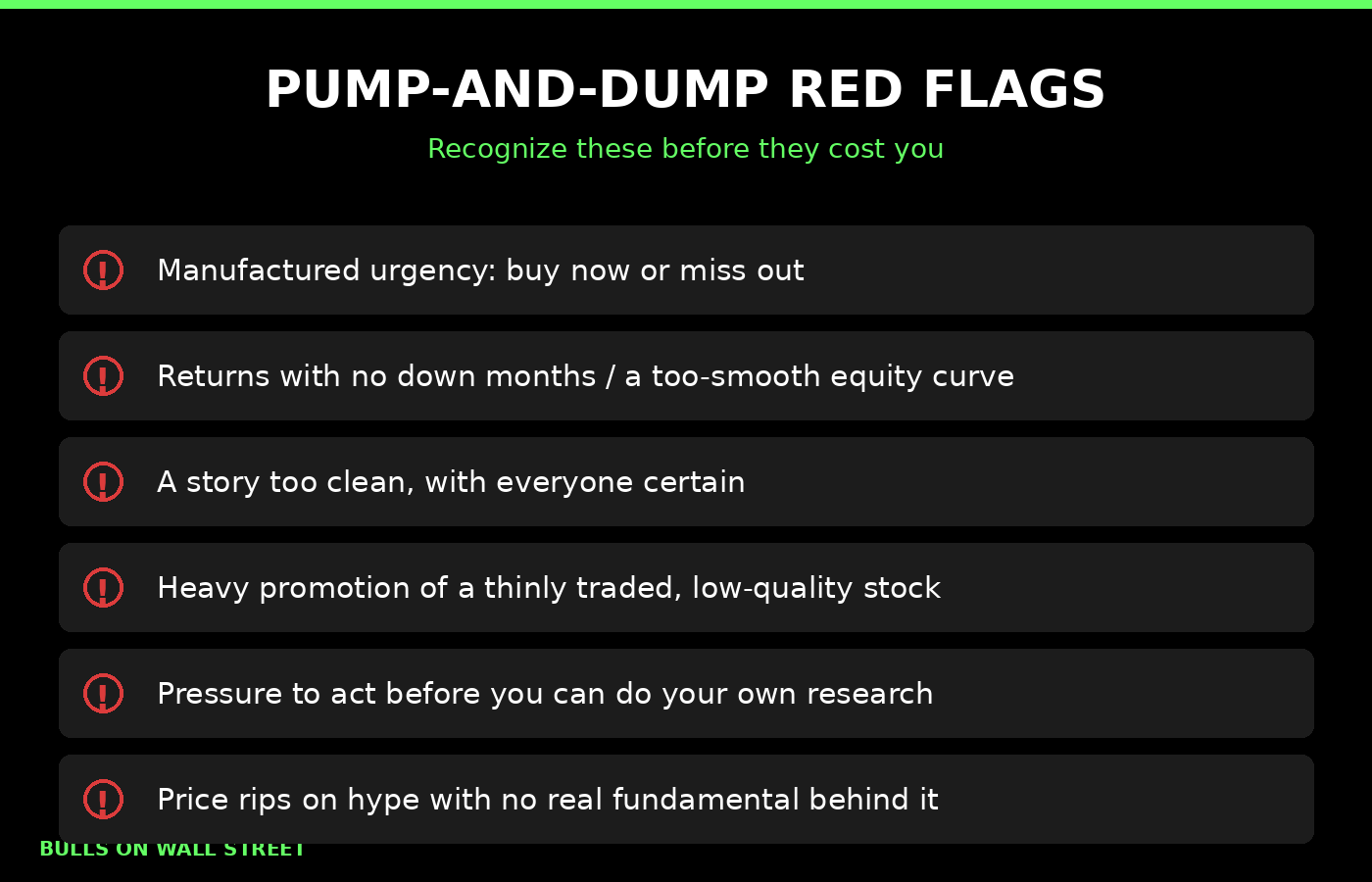
Boiler Room is based on the same world Belfort inhabited — bucket shops targeting retail investors with worthless stocks. The sales culture is terrifying in how effective it is. These guys are not stupid. They are just completely without ethics, and the film shows exactly how that culture sustains itself through commission structures, peer pressure, and manufactured urgency.
Watch the sales call scenes carefully. You will hear every manipulation technique that bad actors use on retail investors. Recognizing those patterns protects you. It also teaches you something about conviction — because the best traders deliver their thesis with the same energy, minus the fraud.
The Wizard of Lies (2017)
Robert De Niro plays Bernie Madoff in this HBO film about the largest Ponzi scheme in history. It is slow, cold, and deliberately uncomfortable, and that is the point. There is no glamour here. Just a quiet man who lied to everyone, including the people closest to him, for decades.
The trading lesson is one I hammer with every student: returns that never have a down month are the single reddest flag in all of markets. Real trading has drawdowns. Real edge has losing streaks. Anyone showing you a perfectly smooth equity curve is either lying or about to blow up. Madoff sold certainty, and certainty does not exist in this business. The moment you start believing your own results cannot go backward is the moment you are most exposed.
Enron: The Smartest Guys in the Room (2005)
This documentary breaks down how Enron, once one of the most admired companies in America, collapsed into the biggest accounting fraud of its era. It is a clinic in how mark-to-market accounting, incentive structures, and pure hubris can manufacture the appearance of success right up until the whole thing implodes.
For a trader, the takeaway is about skepticism. When a story is too clean, when everyone in the room is certain, when the stock only goes up and nobody can explain exactly why — that is precisely when you tighten your stops and ask what you are missing. The smartest guys in the room were not stupid. They were certain. Certainty is what got them. Markets punish certainty, which is exactly why a defined risk-management process beats conviction every time.
The Best Trading Movies About Risk and Discipline
These three are the ones I would make every new trader watch on day one. Not because they are fun, but because they show you the exact failure mode that ends most trading careers: the refusal to take a loss.
Rogue Trader (1999)
Ewan McGregor plays Nick Leeson, the trader who single-handedly bankrupted Barings Bank, one of the oldest banks in Britain, by hiding losses in a secret error account he labeled 88888.
This is the single best film ever made about what happens when you will not accept a loss. Leeson did not blow up in one trade. He took a small loss he could not stomach, hid it, then traded bigger to win it back, lost again, hid that, and repeated the cycle until the number was so large it took down a 233-year-old institution. Every blown-up account I have ever seen traces back to the same root. A small loss the trader would not accept, doubled and doubled into a catastrophic one.
The 88888 account is every trader’s hidden P&L, the position they will not look at and will not close. This is exactly why we teach the 3-loss rule and strict 1% position sizing. Not because the rules are clever, but because they make it structurally impossible to become Nick Leeson. Discipline is not a personality trait. It is a system you build before the pressure hits.
I have watched this play out in real life more than once. Years back we had a trader in our chatroom we called Big City Rob, out of Miami. Coming out of the COVID crash he was convinced the economy was headed straight into a depression, so he loaded up on UVXY betting on the collapse. Here is the problem. UVXY is a structurally decaying instrument. It bleeds value over time by design and does reverse split after reverse split just to keep its price off the floor. Rob did not respect that. He averaged down something like five times as it fell, convinced he was early instead of wrong. He ended up down 99.99 percent, still holding after split after split, a position that had quietly cost him over a million dollars. That is Nick Leeson in miniature. Not one catastrophic trade, but a small thesis he refused to abandon, doubled and doubled until the loss was total. Two lessons live inside that story. Never average down into a loser to prove you were right. And never trade an instrument whose mechanics you do not fully understand.
Glengarry Glen Ross (1992)
Technically a real estate sales film. Practically essential for any trader.
Alec Baldwin, Jack Lemmon, Al Pacino, Kevin Spacey, and Ed Harris. That cast alone should be enough. The film adapts David Mamet’s Pulitzer Prize-winning play about salesmen competing for leads under brutal pressure.
Why does this matter for traders? Because trading is fundamentally a psychological game. You are constantly selling yourself on a thesis, managing the psychology of an open position, and deciding when conviction crosses into stubbornness. Every failure mode these characters exhibit — denial, desperation, cutting corners — shows up in trader behavior every single day.
ABC — always be closing — is the wrong mentality for trading. This film shows you exactly why.
Floored (2009)
This documentary does not get discussed enough.
Floored profiles Chicago pit traders as electronic trading systematically eliminated their entire way of life. These are people who spent decades building skills, relationships, and fortunes on the trading floor — and then watched it become obsolete in less than a decade.
The lesson is uncomfortable: your edge has a shelf life. The traders in this film were some of the best at what they did, and the market made them irrelevant anyway. That is why continuous improvement is not optional in this business. It is existential.
The traders who survived that transition were the ones who adapted fastest. If you are still using the same setups you learned three years ago without refining them, this film is a wake-up call.
The Best Trading Movies About Finding an Edge in the Market
Edge is the whole game. These three films, in very different ways, are about how you find one and how fragile it is once everyone else figures it out.
Moneyball (2011)
Brad Pitt plays Billy Beane, the general manager of the Oakland A’s who used data and statistical analysis to compete against teams with three times his budget. It is a baseball movie on the surface. It is a trading movie underneath.
This is the most on-brand film on this entire list for how I actually trade. My edge is not a secret indicator or a hot tip. It is a process and a scanner that surface asymmetric setups the crowd is not looking at, day after day, with no emotion attached. Beane found edge through data while everyone around him trusted gut and tradition. That is exactly what a real trading system does.
But here is the danger with Moneyball, and it is bigger in 2026 than it was when the film came out. Most traders take the wrong lesson from it. They think the edge was the data. It was not. The edge was the decision-making and the discipline to act on a process when everyone said it was crazy. That distinction matters more now than ever. Everyone has data today. Everyone has AI. I have watched people build dashboards in tools like Perplexity that look slicker than a Bloomberg terminal, and they walk away convinced they are quants with some special data-processing power. They are not. Data and AI are commoditized. Everyone has them now. The real edge left in this market is exactly what every film on this list keeps circling back to: proper decision-making, discipline, a defined process, and the ability to actually stick to it when the pressure hits. The numbers are the easy part now. Being the kind of trader who follows the process when it counts is the hard part, and that is where the money still is.
Trading Places (1983)
This is the one you watch when you need to remember that markets are ultimately a human game.
Eddie Murphy and Dan Aykroyd star in this comedy about two commodity brokers who bet on whether environment or genetics determines character. Murphy’s street hustler gets dropped into the trading world and adapts immediately. The elitist executive they replace him with collapses under pressure.
The finale involves a play on frozen concentrated orange juice futures that is actually a reasonable depiction of how information asymmetry creates trading edges. It is also just a flat-out great film. Watch it on a Sunday when the market is closed and you need to decompress.
Billion Dollar Day (1985)
This BBC documentary is from another era, and that is precisely what makes it valuable.
Three forex traders — based in New York, Hong Kong, and London — are filmed over the course of a single trading day moving enormous positions across global currency markets. The technology looks ancient. The principles are timeless.
Watching professionals operate under real pressure, making real-time decisions with massive downside exposure, while staying emotionally controlled — that is as relevant today as it was forty years ago. If you want to understand why discipline is the only edge that truly compounds over time, this delivers that message better than any motivational content I have come across.
The Best Modern Trading Movie: Retail Traders and Meme Stocks
Every film above is at least a decade old. This is the one that captures the market you are actually trading in right now.

Dumb Money (2023)
Dumb Money tells the story of the January 2021 GameStop saga — Keith Gill, better known as Roaring Kitty, and an army of retail traders on Reddit who squeezed hedge funds that were heavily short GME. Paul Dano plays Gill, and the film does a genuinely good job capturing the energy of that moment: the social-media-driven momentum, the short squeeze, the gamma squeeze, and the raw psychology of a crowded trade where everyone is watching everyone else.
This is the most relevant film on the list for anyone trading momentum today. The mechanics it shows — extreme short interest, retail flow overwhelming institutions, options dealers forced to hedge, sentiment driving price far past any fundamental — are the exact forces that create the explosive intraday moves I trade every morning. If you want the sober, data-driven version of what actually happened, the SEC’s own staff report on the early-2021 meme stock events is the definitive document, and it complicates the simple short-squeeze narrative in ways every momentum trader should understand.
I lived this one. I day traded GME and AMC every single day through the January 2021 mania, taking scalp after scalp and working the enormous range as those names whipped 20, 30, 40 percent intraday. But here is my honest confession about that period: I almost knew too much. I have traded names like these for over two decades, and deep down I know exactly what they are. Garbage. So even as the short interest, the mechanics, the structure, and the news flow all told me they could keep ripping, my own experience made it genuinely hard to comprehend how high they could go. Every fiber of me was wired to expect the crater, because I have watched these things crater a hundred times.
So I did the only thing my experience would let me do. I traded them aggressively intraday and used the range, but I never held overnight. Not once. My edge in 2021 was not predicting how high GME could go. It was knowing precisely what I did not know, sizing for it, and going home flat every single night.
The contrast I always come back to is a trader I worked with who played it the exact opposite way. He caught GME early, near the bottom under 10 dollars, built a real thesis on it, and had the discipline to hold a swing position through the chaos while I was scalping in and out every single day. I could not hold a name I did not believe in. He could, because he had done the work to understand his thesis. Neither approach was wrong. The point is that the people who navigated that mania well were not the loudest voices on Reddit or the ones piling in at 400 dollars. They were the traders who knew their own game and executed it with discipline. That is the entire thing, and it is exactly what the bootcamp is built to teach.
What All of These Films Have in Common
Eighteen movies. Fiction and documentary. Comedy and horror. Classics and a 2023 release. And every single one circles back to the same truths.
Unchecked greed destroys accounts and careers. Belfort, Gekko, Madoff, the Boiler Room crew, the RJR executives in Barbarians at the Gate — every cautionary tale follows the same arc. The trader who cannot define enough eventually loses everything.
The crowd is wrong at major turning points. The traders in The Big Short were ridiculed for years before they were proven right. That kind of conviction in your own analysis — backed by real work, not just contrarianism — is one of the rarest skills in markets.
The refusal to take a loss is what actually kills you. Nick Leeson did not blow up because he was dumb. He blew up because he would not accept a small loss. That single failure mode, dramatized in Rogue Trader, shows up in more blown accounts than every other mistake combined.
Psychological discipline beats technical skill over the long run. Every film on this list is ultimately about decision-making under pressure. Market hours are four hours of non-stop decisions. The traders who last are the ones who have built a process that holds up when the fear and greed kick in. Research on behavioral patterns and pitfalls of individual investors — commissioned by the SEC and compiled by the Library of Congress — confirms what these films show dramatically: overconfidence, loss aversion, and herd behavior are the primary reasons retail traders underperform, not lack of information.
After 25 years in these markets and training over 7,000 students through our 60-Day Trading Bootcamp, I can tell you with certainty: the technical side of trading is learnable in months. The psychological side takes years. These films accelerate that education.
I trade live every market morning in the Bulls on Wall Street trading chatroom, and a full-access 7-day trial costs just $7. For free lessons and breakdowns of exactly what I am thinking on real trades, subscribe to the new YouTube channel at youtube.com/@kunaldesaitrading.
FAQ: Best Trading Movies and Stock Market Films
What is the best trading movie of all time?The Big Short is the most complete package — entertaining, accurate, and genuinely educational about how markets and financial systems work. Margin Call is the most realistic portrayal of institutional trading under crisis conditions.
What is the best stock market movie?For pure stock market drama, Wall Street and The Wolf of Wall Street are the cultural touchstones, but Barbarians at the Gate is the most rewatchable and Margin Call is the most realistic. If you want a documentary, Inside Job is the most important stock market film ever made.
What is the most accurate trading movie ever made?Margin Call consistently receives praise from finance professionals as the most realistic depiction of how institutional trading desks function under extreme pressure. Inside Job is the most accurate documentary on systemic market risk.
What is the best trading documentary?Inside Job for the 2008 crisis, Enron: The Smartest Guys in the Room for corporate fraud, Floored for the death of pit trading, and Billion Dollar Day for a timeless look at professionals under pressure. All four belong in a serious trader’s rotation.
Is there a good movie about GameStop and the meme stock squeeze?Yes. Dumb Money (2023) dramatizes the January 2021 GameStop short squeeze, following Keith Gill and the Reddit-driven retail traders who took on heavily short hedge funds. It is the most relevant film on this list for anyone trading momentum today.
Is The Big Short based on a true story?Yes. The film is based on Michael Lewis’s book of the same name and follows real traders — including Michael Burry, Steve Eisman, and Greg Lippmann — who shorted the mortgage-backed securities market ahead of the 2008 financial crisis.
Is Too Big to Fail based on a true story?Yes. It is based on Andrew Ross Sorkin’s book of the same name and depicts real events surrounding the 2008 financial crisis, including the government bailouts of major banks and AIG. The key characters — Paulson, Bernanke, the bank CEOs — are all real people.
Is Barbarians at the Gate based on a true story?Yes. It dramatizes the real 1988 leveraged buyout battle over RJR Nabisco, at the time the largest LBO in history. KKR, Henry Kravis, and Ross Johnson are all real figures.
Is Rogue Trader based on a true story?Yes. It is based on Nick Leeson’s own account of how he hid trading losses in a secret account and ultimately bankrupted Barings Bank in 1995. It is one of the best films ever made about the danger of refusing to take a loss.
Do trading movies teach real trading skills?Not directly. No film is going to teach you how to read a 5-minute chart or execute a first pullback setup. But the best trading movies teach psychology — greed management, risk discipline, decision-making under pressure — and that may be the most important curriculum any trader can absorb. For actual skills, start with our day trading fundamentals and the VWAP indicator guide, then grab my candlestick chart patterns PDF to learn to read the charts themselves.
What should beginner traders watch first?Start with Inside Job to understand how markets actually work at the macro level. Then watch Margin Call for risk management psychology. Then watch The Big Short for the most compelling illustration of what happens when you trust your analysis over consensus. Save Rogue Trader for the day you take your first real loss.
What trading movies are available on Netflix or streaming?Availability changes constantly. Search for The Big Short, Margin Call, Too Big to Fail, Inside Job, and Dumb Money as starting points across Netflix, HBO Max, and Amazon Prime. Barbarians at the Gate is an HBO film and typically available on Max.
Why is Glengarry Glen Ross on a trading movies list?Because trading is fundamentally a game of conviction, decision-making, and psychological endurance. Glengarry Glen Ross is one of the most precise studies of those exact dynamics ever put on screen. Every failure mode the characters exhibit maps directly to trader behavior.
What should I do after watching these movies?Build a real process. Learn proper entries, position sizing, and risk management. A great starting point is our pre-trade entry checklist and our risk management guide. Movies are inspiration. A repeatable process is what actually makes you money.
Ready to Build Real Trading Skills?
Movies are inspiration. The Bootcamp is the process.
The Bulls on Wall Street 60-Day Live Trading Bootcamp has trained over 7,000 students since 2008. You will learn momentum trading, swing setups, risk management, and how to scan for the right stocks — all alongside Kunal trading live in the chatroom every market day.
No live trading during class. That is non-negotiable. You learn the process first. You simulate. You build your trading business plan. You watch live trading in the chatroom. Then you go live when your simulator data supports it. That structure is why our students actually make it.
If you want to see what real momentum trading looks like before you commit, start with the first pullback trading strategy — one of the highest-probability setups in any market condition.
Apply for the 60-Day Bootcamp here.
About the Author
Kunal Desai is the CEO and founder of Bulls on Wall Street. A professional trader since 2007, he has navigated every major market cycle -- from the 2008 financial crisis to today's high-volatility environments. Having mentored 7,000+ students through his live trading bootcamps, Kunal trades live every morning in the Bulls on Wall Street Trading Chatroom, where a full-access 7-day trial costs $7. He is dedicated to teaching real-world execution and high-probability strategies. Based in Miramar Beach, Florida.
Connect with Kunal: Read his full story | Instagram | YouTube